
How to Search Criminal Dockets
Marion County posts no county-hosted trial-docket search on its official pages. Start with the re:SearchTX portal instead. Be ready for a bump. The public address has returned a 403 response, which blocks access for many visitors. A blank result there does not mean a case is missing. The local court may not be integrated yet. The docket entry may be new. Or viewing may be restricted for a reason the portal does not explain. Gather your details before you search any route. Bring the cause number, the defendant's name, a rough filing date, and the assigned court. Then work through each option the county offers.
- Try re:SearchTX and select the correct court and criminal case type if those controls are available.
- For a felony or district case, call or visit the District Clerk for the public docket history.
- For a county misdemeanor, contact the County Clerk or county court office.
- For a Class C matter, contact the named JP precinct or Jefferson Municipal Court.
- For older material, send the keeper a written request naming the court, cause number, date range, and exact record.
Marion Criminal Docket Fallbacks
The statewide portal only helps if it actually returns the Marion County criminal docket you need. Access is the first hurdle: the re:SearchTX public portal has returned a 403 response, so its current search fields and its Marion County coverage cannot be counted on from outside. Plan a fallback. Call the right clerk first. Ask whether you can inspect court records at the counter, and confirm whether a public terminal exists in the courthouse before you drive there. Marion County publishes nothing about terminal availability. A phone call is the only way to know. For older district-court material, mail a request to the District Clerk, and settle the payment and copy fees with that office before you send anything.
What a Criminal Docket Shows
A Marion criminal docket is a dated register. It is not the full case file. Expect fields for dates, events, and orders rather than every document. Ask the clerk to confirm what the local entries mean. Never guess at abbreviations.
| Cause number | The court identifier; no verified local format was published. |
|---|---|
| Case style | The State of Texas and accused, assigned court, and judge. |
| Charge | The offense description and charging event, which may be an information or indictment. |
| Settings | Arraignment, pretrial, motion, trial, plea, sentencing, review, reset, or continuance. |
| Outcome | Plea, judgment, dismissal, conviction, sentence, disposition, or appeal when public. |
A Marion County criminal docket entry only means something was filed. It does not confirm the document image is public or free, so request the charging instrument, order, or certified judgment on its own.
Marion Felony Docket Routes
Felony cases may land in either the 115th or 276th Judicial District Court. Other district matters go there too. Both hold concurrent Marion County authority under Texas Government Code Sections 24.217 and 24.453. Neither court serves Marion County alone. A judge's primary office tells you little about where a file sits. The cause number and court assignment matter most.
The official District Court page shows the local office context for each assigned court.
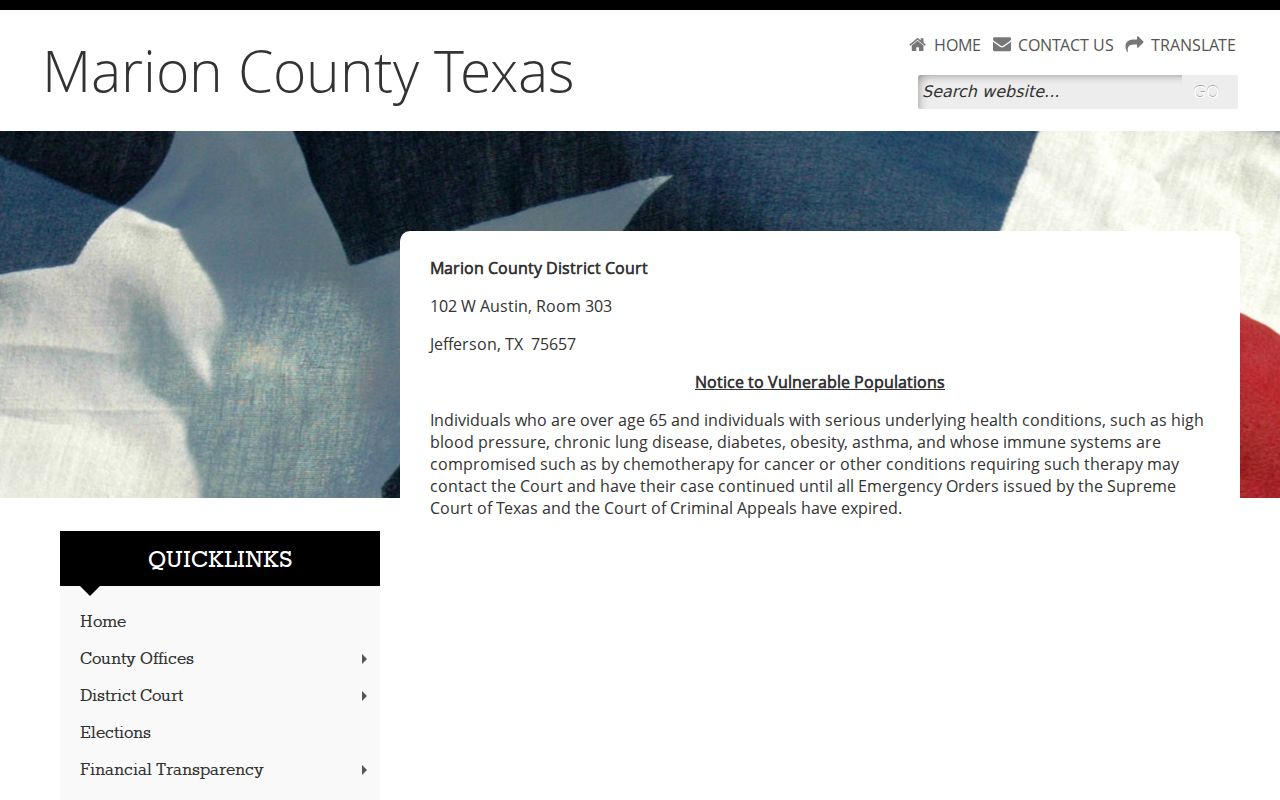
The District Clerk in Room 303 keeps criminal records for both district courts. Call (903) 665-2441 to confirm which docket holds a cause and to check the newest setting.
Stages on a Criminal Docket
The first visible entry is often the charging instrument. An arraignment brings the accused before the court, and a plea may be entered there. Pretrial settings cover motions, readiness, and scheduling. A reset only swaps one date for another. The case stays alive. Later entries may show a plea hearing, trial, judgment, sentencing, review, or disposition.
Docket flow: Filing → Arraignment → Pretrial → Plea or Trial → Disposition → Sentencing
Not every cause follows that order. The newest signed notice or order, plus current coordinator information, controls over an old date.
Read Marion Criminal Docket Terms
Marion County publishes no local criminal codebook. These terms help you read a register without forcing common labels into local codes they may not carry.
- Information or indictment
- A charging record; an indictment generally reflects a grand jury charge.
- Reset
- A new setting that moves or replaces an earlier date.
- Disposition
- The recorded outcome, such as dismissal or conviction.
- Notice of appeal
- An event showing that appellate review was invoked.
Bond and release details sometimes show up, depending on the access rules in force. Any shorthand on a Marion County printout should be checked with the clerk who issued it.
Which Court Holds Criminal Dockets
The offense level and the place of filing decide the keeper. Route Marion County searches as follows:
| Matter | First office | Contact |
|---|---|---|
| Felony or district criminal | District Clerk, 115th or 276th | (903) 665-2441, Room 303 |
| County misdemeanor | County Clerk or County Court | (903) 665-3971 or (903) 665-3261 |
| Fine-only Class C or traffic | JP1 or JP2 | (903) 665-2392 or (903) 665-3581 |
| Jefferson ordinance or Class C | Jefferson Municipal Court | (903) 665-7159 |
The official justice-court page provides the JP channels shown here.
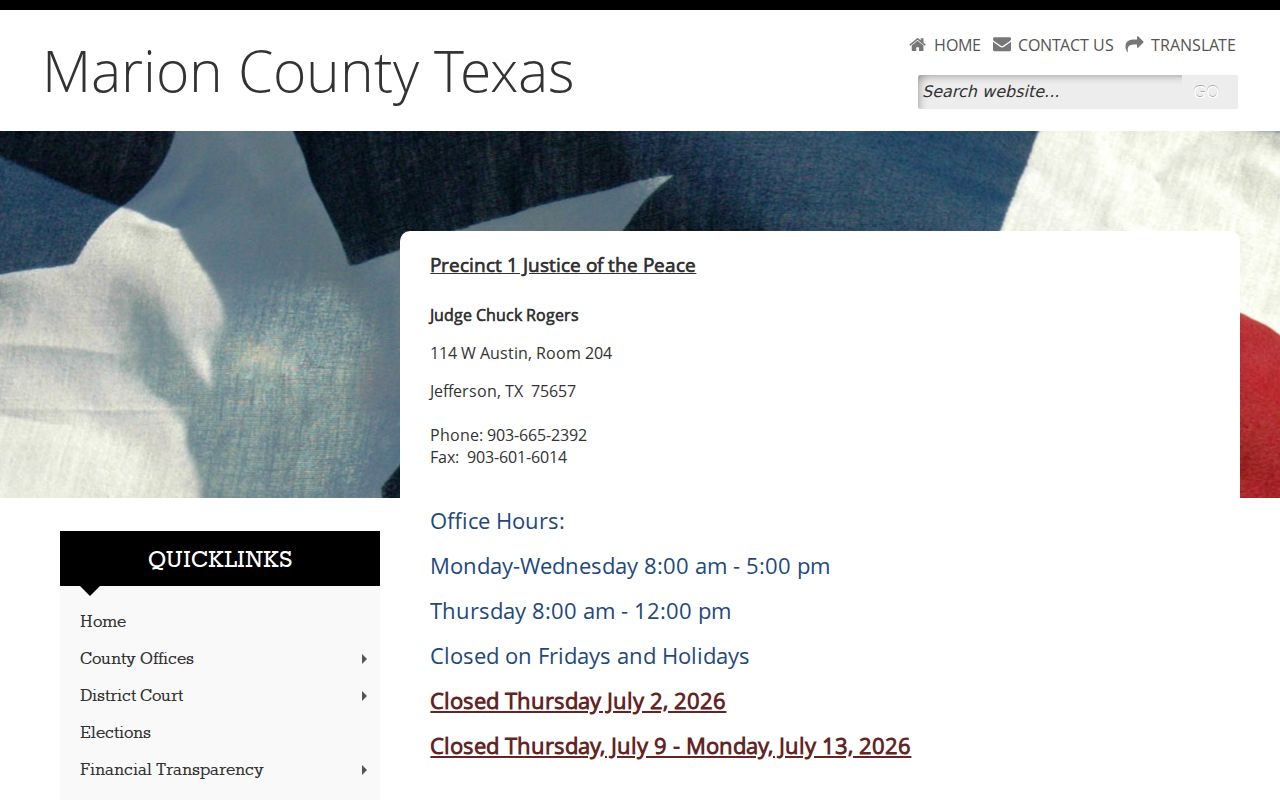
Its payment links are not docket viewers. Confirm status and the next hearing with the issuing court.
Marion County Criminal Court Role
Marion's constitutional county court holds general criminal and probate jurisdiction under Government Code Section 26.258. Sections 24.217 and 24.453 also describe its concurrent misdemeanor authority. That split matters. It is why a "county criminal case" has no single universal search box.
Start with the County Clerk in Room 206 for county-court files. Call (903) 665-3971. County court administration sits at (903) 665-3261. Does the record name the 115th or 276th District Court? Switch to the District Clerk instead. That check keeps a request from going to the wrong office.
Confirm Marion Criminal Docket Resets
A date in an old event may have passed, been reset, or been replaced. For district cases, the coordinator and District Clerk share (903) 665-2441. Give the court, cause number, party name, and date seen. Then ask for the newest public notice or order. Do not trust a county calendar alone.
The Texas local-rules search helps locate procedure. But it is not a case calendar.
A term date on the Marion County criminal docket is not a hearing date for your cause. Check the courtroom, the time, the judge, and the setting type before you rely on it.
Check Marion Criminal Docket Offices
The Texas OCA court directory is an official way to identify a court and its public office contact.
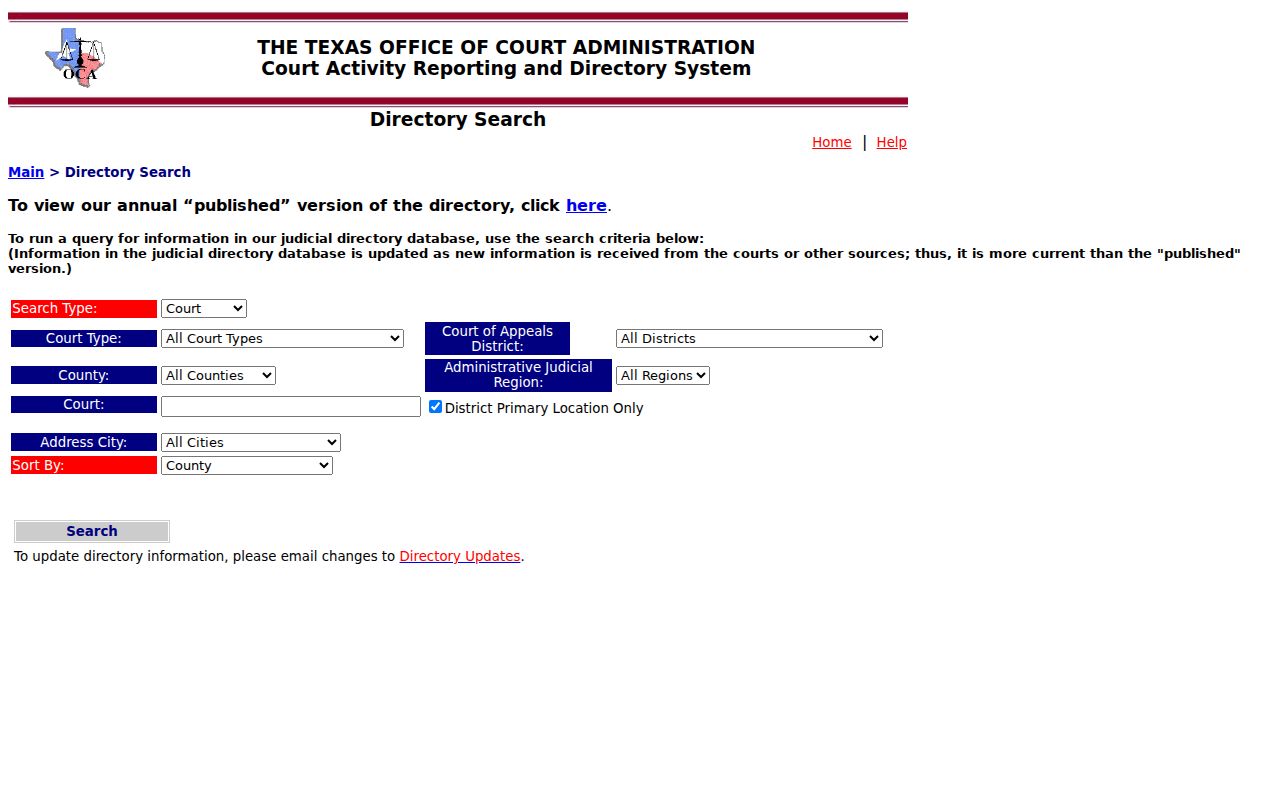
Directory records and county pages update on different schedules. When entries conflict, use the live county page. Then call before sending a request. That habit helps you tell a district court from County Court, a JP precinct, or municipal court.
Public Access and Sealed Criminal Dockets
Court files in Texas sit outside the Texas Public Information Act's usual reach. They are not executive-agency records. Judicial rules, statutes, and court orders govern access instead. Ask for something that already exists. That could be a docket entry, a case-event history, an order, or a judgment. Nobody has to build you a custom report. A strong written request names the court and the cause number. Add the rough filing date, the exact document, and the copy type you want. That level of detail lets staff pull an existing Marion County record. Nothing new gets compiled.
Key access rules:
Texas Rule of Judicial Administration 12 governs covered judicial records and exceptions.
Criminal Procedure Chapter 55A controls expunction.
Family Code Chapter 58 restricts juvenile records.
Several things can shrink what the public sees in a criminal docket. Sealing is one. Nondisclosure orders, redaction, expunction, juvenile confidentiality, or records that were never fully integrated are others. Sometimes the public docket carries only a limited label. The filed image itself stays closed. Rule 21c also forces sensitive identifiers out of filed documents before they reach the file. A blank search result proves nothing, and a lawful restriction should never be worked around. Note one more thing. The District Clerk's staff will not hand out expunction forms. They will not give legal advice either.
Marion Criminal Docket Activity
For hard numbers, turn to the OCA FY2024 district summary, which counts activity from September 1, 2023 through August 31, 2024. Its Marion County criminal line measures court workload. It is not a live count of people.
The same report shows 82 reactivated cases and 60 moved inactive.
Marion Criminal Docket Appeals
Filing a notice of appeal opens a brand-new appellate case tied to the trial cause. Marion County state appeals usually land at the Sixth Court of Appeals at Texarkana. Above it sits the Court of Criminal Appeals as Texas's highest criminal court. The two dockets stay separate. A trial disposition can show up locally well before the appellate register builds its own full sequence. That gap trips people up. Run the trial number through the Texas appellate case search when you have it. Keep in mind the data may lag. The District Clerk still owns the trial register. The appellate clerk handles briefing, submission, and judgment entries. Matching both cause numbers keeps the local record and the later appeal straight.